Policy Lab
Political AI with a cooperative mandate
Real-world politicians talk over each other's heads. Policy Lab puts AI agents in their place, gives them genuine political beliefs but a collaborative attitude, and asks them to draft better policies.
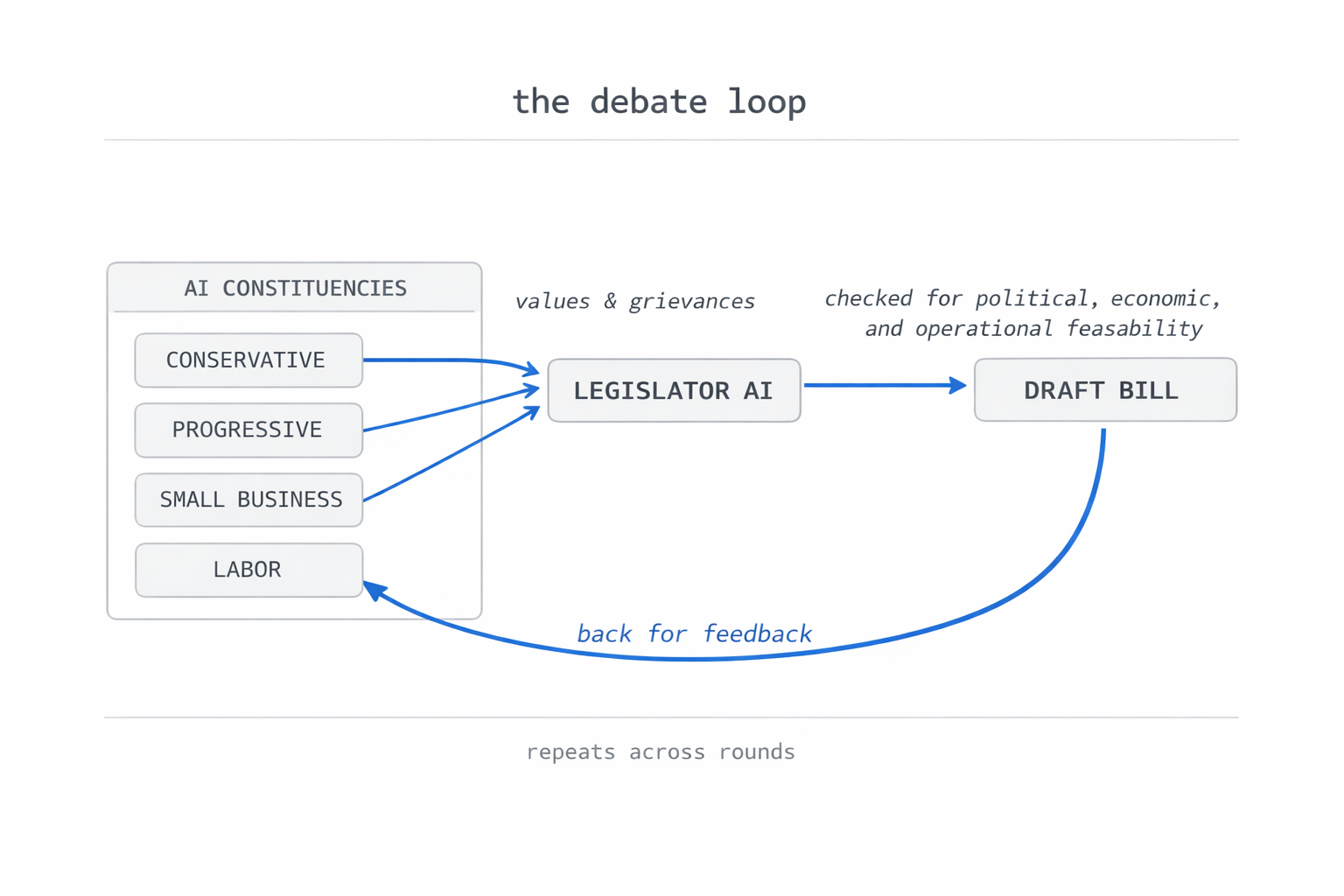
The problem
Most policy is written with a focus on pleasing the ruling party's electoral base or donors, resulting in ineffective laws that get overturned as soon as the balance of power shifts. It's also often written as a zero-sum exercise, with a focus on getting what's wanted by taking it from others or limiting them, instead of creating it.
The approach
Each Policy Lab debate assigns AI agents to represent real political constituencies: groups like conservatives, progressives, small business owners, factory workers, or rural communities, depending on the subject. Each agent holds that group's genuine beliefs and self-interest, but has a mandate to be honest and collaborative. They propose, object, revise, and repeat.
Featured Topic
Immigration Reform in the US 🇺🇸
From 16% to 70% average approval across final cluster proposals*
Run on 9 March 2026
More Topics
3 additional
Student Loans Reform in the US 🇺🇸
From 11% to 55% average approval across final cluster proposals*
Run on 6 March 2026
Healthcare Reform in the US 🇺🇸
From 18% to 62% average approval across final cluster proposals*
Run on 4 March 2026
Immigration Reform in Italy 🇮🇹
From 11% to 63% average approval across final cluster proposals*
Run on 1 March 2026